.png)
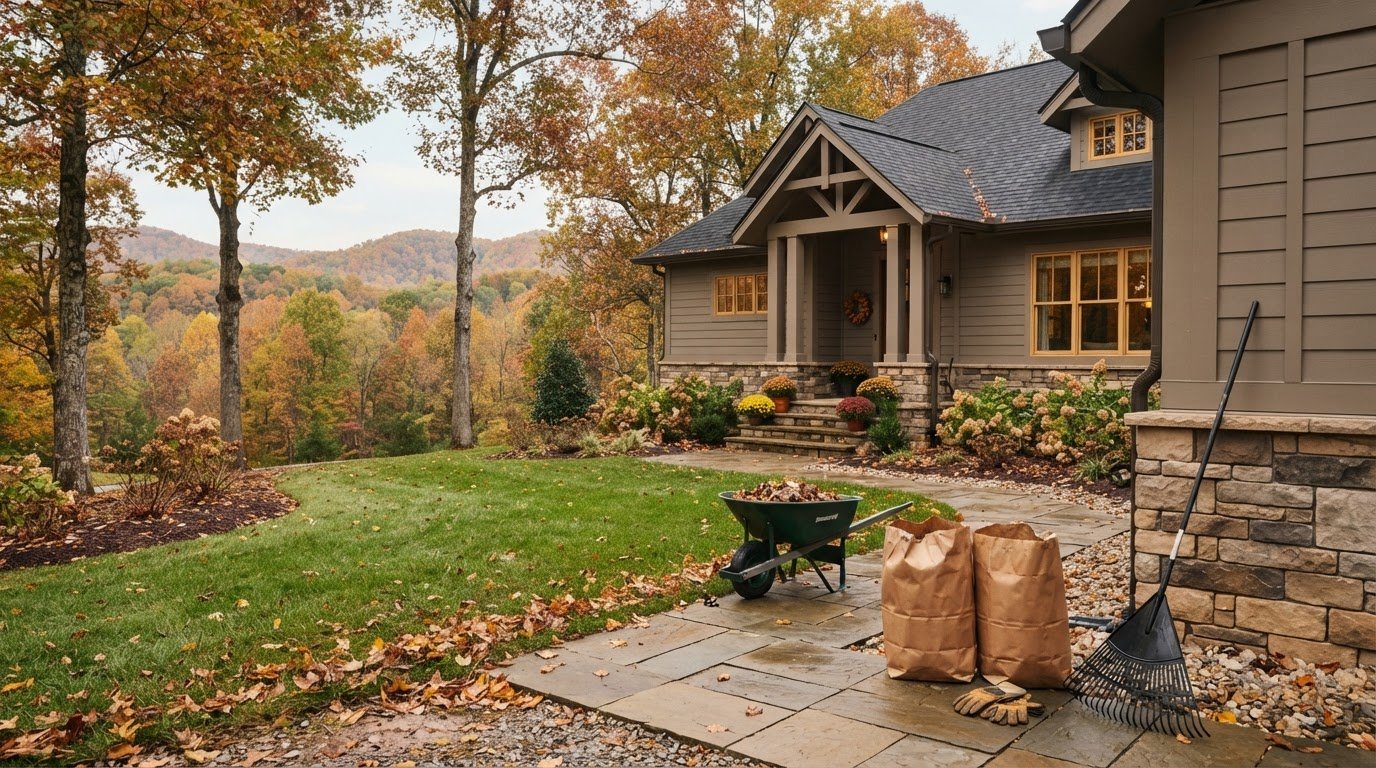
What if the best way to prepare your Knoxville yard for winter isn’t to tackle every chore at once, but to handle the right jobs in the right order? Fall Yardwork can be easy to put off as leaves collect on walkways and around the home. A short plan helps you focus on the areas you use most, sort ro...
What if the best way to prepare your Knoxville yard for winter isn’t to tackle every chore at once, but to handle the right jobs in the right order? Fall Yardwork can be easy to put off as leaves collect on walkways and around the home. A short plan helps you focus on the areas you use most, sort routine cleanup from bigger concerns, and decide what you can handle safely.
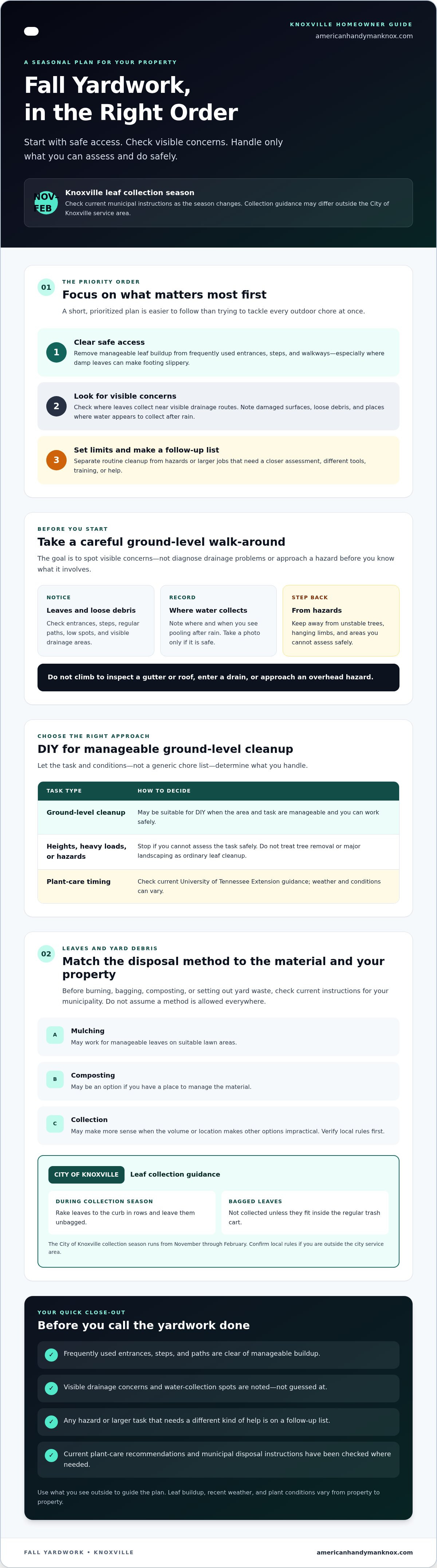
This guide covers practical priorities for Knoxville homeowners, from clearing leaves and debris to checking outdoor areas before colder weather arrives. You’ll find ways to assess paths and visible drainage, decide what may be manageable as a DIY task, and check local instructions before disposing of yard waste. Knoxville’s leaf collection season runs from November through February, so check current guidance as the season changes. Use the checklist to work in a sensible order and note any tasks that need a different kind of help.
Key Takeaways
• Walk around your property before starting, noting slippery leaves, visible drainage concerns, and outdoor hazards.
• Keep Fall Yardwork manageable by clearing high-use areas first and adjusting the plan to your property and conditions.
• Ground-level cleanup may be suitable for DIY, but stop if a task involves heights, heavy loads, or hazards you can’t assess safely.
• Check University of Tennessee Extension guidance for seasonal plant-care timing, since weather and conditions can vary.
• Verify current municipal instructions before disposing of leaves or debris, and make a follow-up list for anything unresolved.
Fall Yardwork in Knoxville: What to Prioritize Before Cold Weather
A short, prioritized plan is easier to follow than a list of every possible outdoor chore. Start with safe access to your home, then check for visible debris and drainage concerns. This keeps Fall Yardwork focused on what your property needs rather than treating every task as equally urgent.
Walk around the property before gathering tools. Check entrances, steps, and walkways for leaves that could become slippery when damp. Look along visible drainage routes for leaves or loose debris, and note damaged surfaces or unstable items. You don’t need to resolve everything during the first pass. Identify what you can handle safely and what needs a closer assessment.
Landscape maintenance can include many different tasks, from planting to irrigation. A seasonal home check doesn’t need to cover them all. Focus first on basic cleanup and access. Keep tree removal, major landscaping, and other specialized work separate from routine leaf and debris management.
Clear first
Remove manageable buildup from frequently used walkways, steps, and entrances.
Look next
Check where leaves collect near visible drainage routes and note areas that may need attention.
Set limits
Identify hazards or larger jobs that require tools, training, or help beyond what you have.
Which fall yardwork tasks matter most around the home?
Prioritize safe footing and clear access before less urgent cleanup. Damp leaves can make hard surfaces slippery, particularly on shaded steps and paths where they linger. Next, check outdoor areas where wind or runoff gathers loose debris. Treat a tree that needs removal or a major landscape change as specialized work, not an ordinary leaf-clearing chore.
When should Knoxville homeowners begin fall cleanup?
Use what you see outside rather than relying on one date. Leaf buildup, recent weather, and plant conditions vary from property to property. For plant-care timing, check current University of Tennessee Extension recommendations instead of relying on a generic regional schedule. City leaf collection runs from November through February, but that window doesn’t determine when every home should begin cleanup. Verify current municipal disposal guidance before setting leaves or yard waste out.
How to Assess Leaves, Drainage, and Outdoor Hazards Before You Start
A careful walk-around helps you decide what needs attention before you buy supplies or move debris. Look over the property from the ground at a comfortable pace. The goal is to spot visible concerns, not diagnose drainage problems or approach a hazard before you know what it involves.
A ground-level yard inspection for Knoxville homes
Start at the entrances you use most, then check steps, paths, and other regular routes. Damp leaves can cling together in a slick layer, reducing grip on concrete, stone, or wood. Even a thin covering can make footing less secure. Look for loose branches and debris nearby.
Next, scan places where leaves tend to gather, including low spots and visible drainage routes. If you notice water collecting after rain, record where and when you saw it rather than assuming you know the cause. Don’t climb to inspect a gutter or roof, enter a drain, or approach an unstable tree or overhead hazard. Take a photo from a safe distance and note anything that needs qualified follow-up.
Notice
Leaf piles and loose debris near paths, entrances, and visible drainage areas.
Record
Where water appears to collect after rain, with a photo if it’s safe to take one.
Step back
From unstable trees, hanging limbs, or areas you can’t assess safely.
What to do with fallen leaves and yard debris
Choose a disposal approach based on the material and your property. Mulching may work for manageable leaves on suitable lawn areas. Composting may be an option if you have a place to manage the material. Collection may make more sense when the volume or location makes those options impractical. Before burning, bagging, composting, or setting out yard waste, check current instructions for your municipality. Don’t assume a method is allowed everywhere.
For City of Knoxville leaf collection, the city’s guidance says to rake leaves to the curb in rows and leave them unbagged during the collection season, which runs from November through February. Bagged leaves aren’t collected unless they fit inside the regular trash cart. These instructions may not apply outside the city service area, so confirm your local rules before putting leaves out.
Once you’ve separated ordinary leaf cleanup from bulky debris that needs a different plan, you can ask whether a specific removal task fits American Handyman’s junk removal service. Confirm the service area and job details first. This is not a leaf-raking or general yardwork service, so clarify the scope before arranging help.
DIY or Call for Help? Choose the Right Fall Yardwork Approach
Choose tasks according to their risks, not just how quickly you hope to finish. Light cleanup at ground level may be manageable with basic tools. Work involving heights, heavy loads, power equipment, or uncertain hazards calls for greater care. Stop if a job exceeds your tools, training, or comfort. Leaving it for a qualified or task-specific provider is a sensible option.
Which fall cleanup jobs are reasonable to do yourself?
Gathering light leaf cover and clearing small, accessible paths may be suitable homeowner tasks when footing is stable and the debris is manageable. Wear gloves and sturdy footwear, and choose tools suited to the task. Don’t climb a ladder, operate power equipment, or handle unstable branches unless you have the right capability and know how to work safely. If conditions change, pause and reassess.
| Task | Homeowner suitability | Main caution | Next step |
|---|---|---|---|
| Gathering a light amount of leaves at ground level | May be manageable | Wet or uneven footing | Wear sturdy footwear and work within your comfort level |
| Clearing a small, accessible path | May be manageable | Hidden debris or slippery surfaces | Use suitable hand tools and stop if the area feels unsafe |
| Moving a heavy debris pile | Depends on the load and your ability | Strain, awkward lifting, or uncertain disposal | Check disposal options or ask whether removal help fits the job |
| Reaching overhead or dealing with unstable branches | Not a routine DIY cleanup task | Falls or falling limbs | Keep clear and seek qualified, task-specific help |
When might a local service provider be useful?
Some jobs are better described as a specific removal or exterior-cleaning need than as yard care. American Handyman offers junk removal, which may be relevant if the debris fits that service. Pressure washing may suit an appropriate exterior surface when it needs a separate cleaning assessment. Neither service is leaf raking or general yardwork.
Before requesting a quote, describe the material, approximate amount, location, and access conditions. Confirm that the task and service area fit. For a clearly scoped job that may be eligible, you can request a quote online. A clear description helps determine whether the work matches the offered service before you make arrangements.
A Step-by-Step Fall Yardwork Checklist for Knoxville Homeowners
Use this sequence as a flexible guide, not a fixed schedule. Adjust it to your property, the amount of debris, and the conditions underfoot. Plan the work, prepare safely, clear essential paths, manage debris according to local guidance, then review and record what still needs attention.
Prepare tools and clear the highest-use areas first
Plan your route.
Decide which areas need attention and what you can safely handle. Check the forecast and postpone work if rain, poor footing, or other conditions make surfaces or equipment unsafe.
Gather what you need.
Set out suitable gloves, sturdy footwear, basic hand tools, and bags or containers if they suit your disposal method. Avoid buying specialized equipment before you know the task calls for it.
Start with access.
Clear entrances, steps, and frequently used paths before moving to less-used parts of the yard. Work in manageable sections so debris doesn’t spread back across areas you’ve already cleared.
Pause at hazards.
Stop before handling heavy loads, using power equipment, reaching overhead, or approaching unstable branches. If the task exceeds your tools, training, or comfort, don’t proceed. Record it for follow-up instead.
Finish cleanup and plan any follow-up work
Sort the material.
Separate leaves and other debris according to your disposal plan. Before bagging, composting, or setting material out for collection, verify current City of Knoxville or local-jurisdiction instructions for your address.
Recheck from the ground.
Walk the cleared paths and look again at visible drainage areas. Note whether debris remains or water appears to collect, but don’t climb or enter unsafe spaces to investigate.
Make a follow-up list.
Write down repairs, larger removal needs, or specialized jobs that call for different skills. A clear description of the material and its location can help you decide what kind of help to seek.
Close out safely.
Put away tools and containers, and leave walkways clear. If the weather shifts or footing becomes slick, stop and return to the remaining work when conditions are safer.
A well-paced Fall Yardwork routine doesn’t need to cover every corner in one session. It should leave the areas you use most in better order and make unresolved concerns easier to identify.
If your final review turns up debris that may fit a junk-removal job, describe the material and location when you request a quote online. Confirm that the job and service area fit before making arrangements.
Finish Fall Yardwork Safely and Arrange the Right Next Step
Before wrapping up, take one final look at the areas you use most. Check that paths and entrances are clear, collected material is contained, and tools are put away. Make a short list of anything that needs follow-up. Routine cleanup can improve access and help you notice concerns, but it can’t guarantee that a property is ready for winter or prevent damage.
A final safety check before the season changes
Stay on safe, stable ground during your last inspection. Don’t remove hazardous branches, reach high areas, or assess suspected structural problems on your own. Keep clear of anything unstable and contact a qualified professional suited to that work. If you’re unsure how to handle leaves or other yard waste, check current municipal instructions for your address. For questions about plant-care timing, consult University of Tennessee Extension guidance that applies to local conditions.
How to ask for help with a suitable cleanup task
Be specific before requesting help. Describe the material, where it’s located, how much there is, and what access is like. Then ask whether the job fits the provider’s listed services. This helps distinguish a suitable debris-removal request from leaf raking, landscaping, or general yardwork, which American Handyman doesn’t offer.
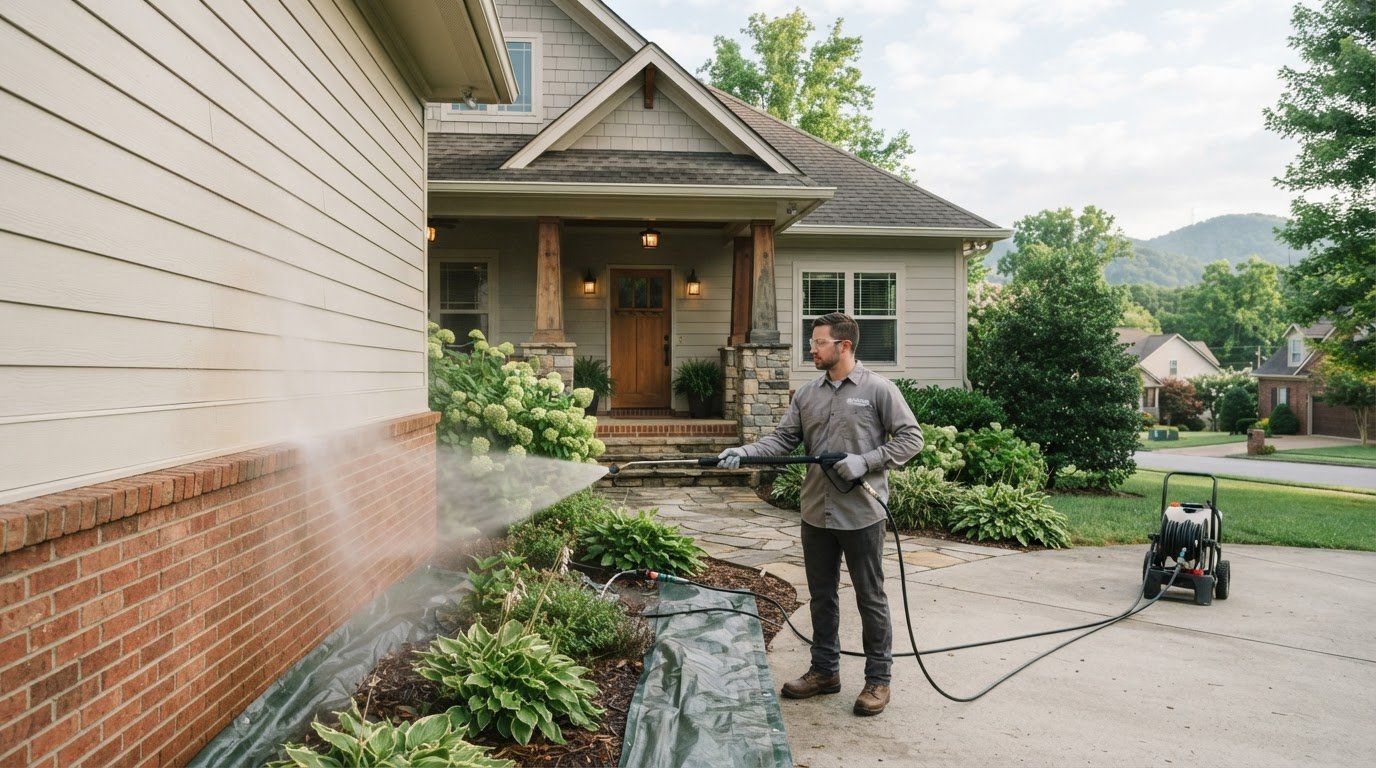
American Handyman offers junk removal and pressure washing. Junk removal may fit certain debris-removal needs, depending on the job details and service area. Pressure washing is a separate task for suitable exterior surfaces, not a leaf-cleanup service.
If you have a clearly described job that may fit one of those services, request a free quote online and ask whether the specific work is a match. Clear disposal guidance and an accurate scope for any outside help make it easier to decide what to do next without taking on work that isn’t safe or suitable for you.
Take the Next Step Toward a Safer, Tidier Yard
A steady Fall Yardwork plan helps you focus on the essentials: keep everyday paths clear, handle manageable debris, and note anything that needs specialized attention. Check local disposal guidance before putting yard waste out, and consult University of Tennessee Extension for plant-care timing suited to local conditions. Don’t take on work that exceeds your tools, training, or comfort.
For a separate, clearly scoped job, American Handyman is a family-owned Knoxville business offering junk removal and pressure washing. These services aren’t general yardwork, so describe the task and ask whether it fits an available offering before making arrangements. Request a free quote online for a suitable home-maintenance job. Discounts are available for military members, first responders, seniors, and pastors.
You don’t have to finish every outdoor task at once. Start with the essentials, make safe choices, and take the next step when you’re ready.
Frequently Asked Questions
When should I start fall yardwork in Knoxville?
Watch local weather and your yard’s condition rather than choosing one fixed date. Leaf drop and plant-care timing can differ between properties and years. For gardening and landscape guidance suited to East Tennessee, consult current University of Tennessee Extension recommendations. Begin with frequently used paths and visible hazards, then fit other cleanup around safe footing and workable conditions. Pause if rain, wind, or slick surfaces make the job unsafe.
What fall yardwork should I do first?
First, clear entrances, steps, and walkways where wet leaves can make footing slippery. Then check accessible areas for loose debris and visible drainage concerns without climbing or entering unsafe spaces. Handle simple ground-level work only if you have suitable tools and safe footing. Leave unstable branches, high-access tasks, and specialized equipment to someone with the right skills. Before moving collected material, check the disposal instructions for your address.
Can I leave fallen leaves on my lawn over winter?
It depends on the amount of leaf cover and the lawn’s condition. A light scattering may call for a different approach than dense, wet piles covering grass or paths. Don’t assume leaving, mulching, or removing all leaves is right for every Knoxville yard. For advice about your lawn, check current University of Tennessee Extension recommendations. Keep leaves off walkways where they could affect safe footing, and follow local guidance for any material you collect.
How do I dispose of leaves in Knoxville?
Check current instructions for your address before bagging leaves, setting them out, composting, or choosing another disposal method. Within the City of Knoxville, leaf collection season runs from November through February. The city says to rake leaves to the curb in rows, unbagged. Bagged leaves aren’t collected unless they fit in the regular trash cart. Rules can differ outside city service areas, so verify with your local jurisdiction. Don’t assume burning is allowed.
Is fall yardwork safe to do by myself?
Light, ground-level tasks may be manageable if you have safe footing, suitable tools, gloves, and sturdy footwear. Stop if a job involves climbing, unstable branches, heavy loads, or equipment you aren’t trained to use. Avoid working when weather makes surfaces or equipment unsafe. If you feel uncertain or the task exceeds your ability, leave it for a qualified provider whose services fit the work. There’s no need to take a risk to finish a cleanup.
Should I mulch or remove fall leaves?
The right choice depends on leaf volume, where leaves have collected, the lawn’s condition, and applicable local guidance. Mulching or composting may suit some properties, while leaves on steps and paths should be cleared to maintain safer access. Don’t apply one method to every yard. For lawn-specific advice, consult current University of Tennessee Extension recommendations. Before bagging leaves or putting them out for collection, check the rules for your Knoxville address.
Can American Handyman help with fall yard cleanup in Knoxville?
American Handyman offers junk removal and pressure washing, but not general lawn care, leaf raking, or landscaping. Describe the specific debris-removal or exterior-cleaning task and ask whether it fits an offered service and the company’s service area. Pressure washing is a separate job for suitable exterior surfaces, not leaf cleanup. For tree work, high-access tasks, or other hazards, contact a qualified specialist. You can request a free quote online and explain the job before making plans.


.png)