.png)
What if the key to a cleaner Knoxville home isn’t more pressure, but knowing when to use less? It’s understandable to worry that a strong spray could strip paint, damage siding, or gouge a wood deck. East Tennessee’s humidity can encourage mold and mildew, making a Power Wash seem like the obvious f...
What if the key to a cleaner Knoxville home isn’t more pressure, but knowing when to use less? It’s understandable to worry that a strong spray could strip paint, damage siding, or gouge a wood deck. East Tennessee’s humidity can encourage mold and mildew, making a Power Wash seem like the obvious fix. But the wrong method can harm the very surfaces you want to clean.
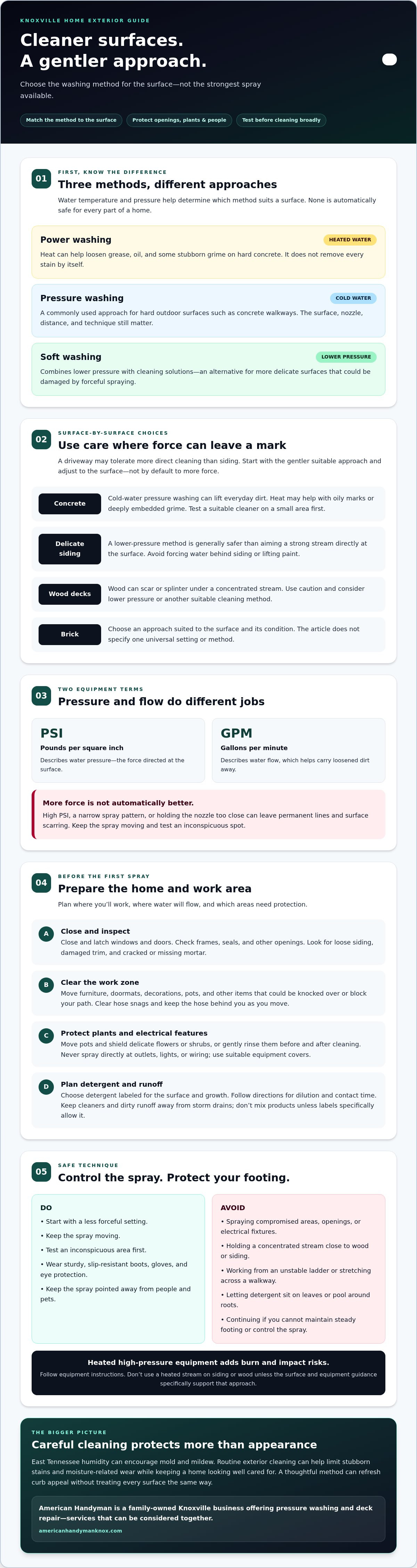
A clean exterior doesn’t require blasting every surface. This guide explains how to choose a method for your home, protect siding and decks, and remove grime safely. You’ll also learn the difference between power washing, pressure washing, and soft washing. Power washing typically uses heated water, pressure washing uses cold water, and soft washing relies on lower pressure for more delicate surfaces.
We’ll cover practical preparation, safe washing techniques, and common mistakes to avoid. With a careful approach, you can refresh your home’s appearance, improve curb appeal, and tackle local mold and mildew while treating your exterior with care.
Key Takeaways
• Before you Power Wash, check openings and protect delicate landscaping from spray and cleaning runoff.
• Match the method to the surface. Vinyl siding, concrete, brick, and wood decks each need a different approach.
• Use a suitable spray direction and pressure to help avoid lifting paint, forcing water behind siding, or damaging wood.
• Routine exterior cleaning can help limit stubborn stains and moisture-related wear while keeping your home looking well cared for.
• American Handyman is a family-owned Knoxville business offering pressure washing and deck repair, which you can ask about together.
Power Wash vs. Pressure Wash: Choosing the Right Method
The terms are often used interchangeably, but the main difference is water temperature. A power washer heats the water, which can help loosen grease and stubborn grime. A pressure washer uses cold water and force to clean common outdoor surfaces. Neither method is automatically safe for every part of your home. The surface, nozzle, distance, and technique all matter.
For Knoxville driveways, pressure washing can lift everyday dirt from concrete. Heated water may help with oily marks or deeply embedded grime. Red clay stains can be stubborn, but more heat or pressure isn’t always the answer. Test a suitable cleaner on a small area first. For delicate siding, a lower-pressure method is generally safer than aiming a strong stream directly at the surface. Soft washing combines low pressure with cleaning solutions, offering an alternative for surfaces that could be damaged by forceful spraying.
When to Use Heat: The Power Wash Advantage
Heat can help break down grease and oil on hard concrete, allowing residue to release more readily than with cold water alone. It may also soften some stubborn deposits, including clay-laden grime, but it won’t remove every stain by itself. Identify the surface and stain first, then test a small, less visible area before cleaning broadly.
Heated high-pressure equipment adds burn and impact risks. Follow the equipment instructions, wear eye protection and sturdy footwear, keep the spray pointed away from people and pets, and maintain steady footing. Don’t use a heated stream on siding or wood unless the surface and equipment guidance specifically support that approach.
Pressure Washing Basics for Homeowners
Cold-water pressure washing is commonly used on hard surfaces such as concrete walkways. Decks need more care. Wood can scar or splinter under a concentrated stream, so use a cautious approach and consider whether lower pressure or another cleaning method is more suitable.
Two equipment terms help explain the cleaning action:
PSI
means pounds per square inch. It describes water pressure, or the force directed at the surface.
GPM
means gallons per minute. It describes water flow, which helps carry loosened dirt away.
High PSI, a narrow spray pattern, or holding the nozzle too close can leave permanent lines and surface scarring. Start with a less forceful setting, keep the spray moving, and test an inconspicuous spot before continuing. A driveway can often tolerate more direct cleaning than siding, but every surface needs a method suited to its condition. Good results come from controlled cleaning, not simply turning up the pressure.
Preparing Your Knoxville Home for a Safe Clean
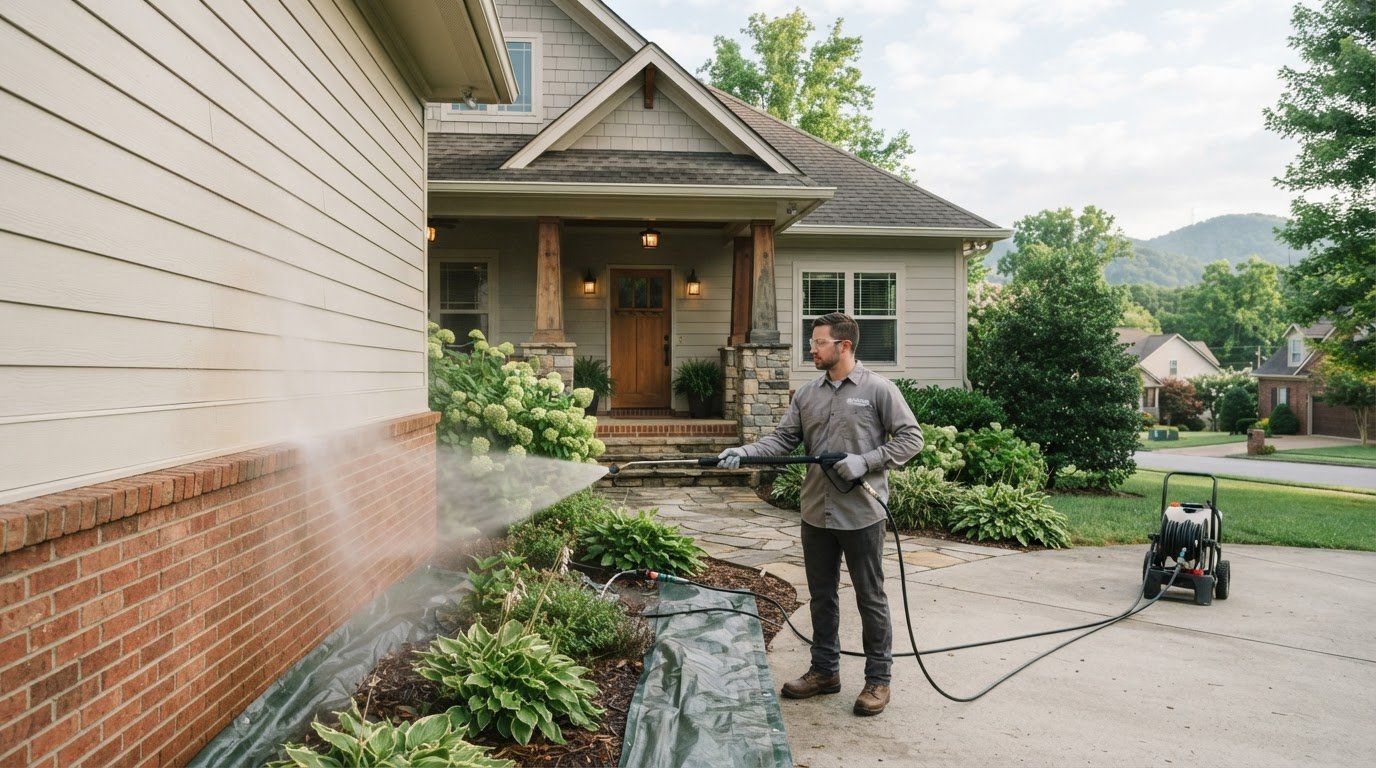
A careful setup helps prevent water from getting indoors, damaging plants, or reaching vulnerable electrical parts. Before you Power Wash, walk around the house and plan where you’ll work, where water will flow, and which areas need protection. Pay attention to gardens and established landscaping, especially near flower beds and shrubs.
Secure the Perimeter First
Close windows and doors, then check that they’re fully latched. Look for gaps around frames, damaged seals, or other openings where spray could enter. Move patio furniture, doormats, decorations, and anything else that could be knocked over or block your path.
Inspect the exterior
Look for loose siding, cracked or missing mortar, damaged trim, and other weak spots. Don’t aim pressurized water at an area that may already be compromised.
Protect electrical features
Turn off power to outdoor outlets or fixtures if you can do so safely. Use suitable covers designed for the equipment, and never spray directly at outlets, light fixtures, or wiring.
Shield plants
Move pots and outdoor items away from the work zone. Lightly cover delicate flowers and shrubs or gently rinse them with clean water before and after cleaning. Don’t let detergent sit on leaves or pool around roots.
Plan for People, Plants, and Runoff
Choose a detergent labeled for the surface and the type of growth you’re treating. For mold and mildew, follow the product directions for dilution and contact time. A biodegradable soap can be a considerate choice, but “biodegradable” doesn’t mean harmless in every amount or situation. Keep cleaners and dirty runoff away from storm drains, and don’t mix products unless the labels specifically allow it.
Wear sturdy, slip-resistant boots, gloves, and eye protection. The hose can catch on steps, furniture, or garden edges, so clear a path before starting and keep it behind you as you move. Don’t stretch across a walkway or work from an unstable ladder. The Centers for Disease Control and Prevention outlines additional risks and precautions in its Pressure Washer Safety guidance. Stop if you can’t maintain steady footing or keep the spray under control.
Preparation takes time, and that’s part of doing the job carefully. If the setup or cleaning feels like more than you can safely manage, learn about American Handyman’s pressure washing and consider whether professional help fits your needs.
Surface-Specific Guide: Siding, Driveways, and Decks
The safest way to Power Wash is to match the method to the material. Concrete can handle more cleaning force than vinyl siding or weathered deck boards, but no surface is indestructible. Check the condition first, choose a suitable spray pattern, and test a small, hidden area before cleaning the full surface.
Siding and Soft Wash Techniques
Vinyl siding and fiber-cement siding, including Hardie board, can be damaged by forceful spray. Use a low-pressure approach and spray from above, directing water downward rather than up under the siding laps. A siding-compatible cleaner can help loosen algae and mildew. Follow its label for use and rinsing. Work in manageable sections, rinse from top to bottom, and don’t let soap dry on the surface, where it can leave streaks or residue.
Concrete and Brick
Concrete driveways and walkways can generally tolerate more pressure than siding, but a concentrated stream held too close may leave etched lines. A surface-cleaner attachment can help produce a more even finish across broad, flat areas. For local guidance, see driveway cleaning services Knoxville. Brick needs a lighter touch, especially where mortar is cracked or loose. Use an appropriate cleaner for moss or lichen, and avoid forcing water into joints. Consider sealant only after the masonry is fully dry and you’ve confirmed the product suits that surface.
Wood Decks and Nozzle Choice
High pressure can raise and roughen wood fibers, a condition often called “furring.” Use a broad spray pattern, lower pressure, and a consistent distance. Keep the wand moving with the grain, and test an inconspicuous board first. If fibers begin to lift or the wood’s surface changes, stop and reassess rather than making another pass.
Nozzle colors often indicate spray angles, but conventions can vary by equipment. Common systems use red for a very narrow, forceful stream, yellow for a narrower fan, green for a wider fan, white for a broad fan, and black for applying soap. Check the washer manual before use. A narrow nozzle can cut into wood, damage siding, or scar concrete if used too close.
Choose the least forceful setup that can do the job. If deck boards are already worn or damaged, consider addressing repairs before washing. American Handyman offers pressure washing and deck repair, so homeowners can ask about these related maintenance needs together.
The Real Value: Curb Appeal and Preventive Maintenance
A clean exterior can make a home look cared for, but the value goes beyond appearance. In Knoxville, humidity and rainfall encourage algae and mildew, especially on shaded siding, walkways, and deck boards. MeasureBoss reports Knoxville averages about 75% humidity and 50 inches of rain annually, conditions that can leave exterior surfaces damp and dirty. A careful Power Wash can remove surface buildup, while routine visual checks help you spot problems that grime might otherwise hide.
Clean siding, concrete, and entry paths can also make a property look more inviting in listing photos and during showings. That can support a strong first impression, though cleaning alone can’t guarantee a higher sale price or property value. Washing away pollen, dirt, and mildew residue clears visible exterior irritants. It shouldn’t be treated as a substitute for addressing indoor air quality or a persistent moisture problem.
Fighting Knoxville Humidity
Check shaded walls and areas near shrubs for green algae, dark marks, or mildew. Clean growth with a method suited to the surface rather than relying on forceful spray. Removing buildup can help keep paint looking presentable, but washing won’t repair failing paint or stop moisture from reaching damaged siding. If growth returns quickly, look for underlying moisture, poor drainage, or limited airflow instead of simply washing more often.
For your family and pets, follow cleaner labels and keep them away from wet work areas until surfaces are rinsed and safe to access. Take care around garden beds, too. The goal is to clean the exterior without spreading residue or runoff where people, pets, and plants spend time.
Cost Savings Through Prevention
Routine care may help you catch maintenance concerns early, but it doesn’t guarantee you’ll avoid major repairs. Look closely at siding seams, trim, deck boards, and mortar after dirt is removed. Soft or discolored wood, peeling paint, cracked joints, and loose materials deserve attention. Washing cannot reverse wood rot or replace damaged siding. It can make warning signs easier to see, helping you decide what needs repair.
Deck boards exposed to persistent dampness may be vulnerable to wood-damaging fungi. Cleaning with an appropriate, gentle method and checking for soft spots can help you monitor their condition. Avoid aggressive pressure, which may scar wood and make the surface rough.
For more on careful exterior care, read about expert pressure washing. If you’d like help with exterior cleaning or related deck repair, ask American Handyman about pressure washing.
Professional Results with American Handyman
Cleaning an exterior safely takes more than a powerful machine. The person doing the work needs to recognize when siding, concrete, or a deck calls for a different approach. A professional can assess the surface, choose an appropriate cleaning method, and work through areas that may be difficult to manage alone. That can also spare homeowners the physical strain of handling equipment and a heavy hose.
American Handyman is a family-owned Knoxville business that provides pressure washing. The company emphasizes trust, honest pricing, and respectful communication about the work. Vetted contractors are available to assist. Ask which surfaces are included, how they’ll be cleaned, and what the work will cost before deciding whether to proceed.
The American Handyman Difference
Trust is built through clear communication and care for the home, not big promises. A careful provider should explain the planned approach, point out visible concerns, and answer questions about protecting siding, landscaping, and outdoor fixtures. American Handyman also offers special discounts for military members, first responders, seniors, and pastors. Ask about eligibility and terms when discussing the work.
Pressure washing can be considered alongside a related maintenance need, such as deck repair. If cleaning reveals a damaged board or a loose section, discussing both needs can help you plan the next step. Make sure the work is scoped clearly so you understand which service is being discussed.
Choose the Right Help for Your Home
Before hiring anyone, ask how they’ll adjust their method for each surface, what preparation is expected, and how they’ll protect plants and electrical features. Confirm the work area and requested tasks, then review the price and scope before scheduling. These questions make it easier to compare options without assuming every exterior needs the same treatment.
If you’d rather leave the equipment and surface decisions to someone else, learn more about American Handyman’s pressure washing. You can also ask about related deck repair and any applicable discount. A measured approach keeps the focus on a cleaner home, treated with care.
Give Your Knoxville Exterior a Careful Refresh
A successful exterior clean depends on choosing a method that fits the surface, preparing the work area, and keeping the spray controlled. Treat siding and deck boards with care, and inspect concrete and other hard surfaces before washing. Regular attention can refresh curb appeal and make developing maintenance concerns easier to notice.
You don’t have to take on the equipment, physical effort, and surface decisions by yourself. American Handyman is a family-owned Knoxville business with vetted contractors available to assist. Special discounts are available for military members, first responders, seniors, and pastors. Ask about the work, its scope, and pricing before moving forward.
Ready to discuss your home’s exterior? Request a free quote from American Handyman and ask whether pressure washing, deck repair, or another listed handyman task fits your needs.
Frequently Asked Questions
Is it okay to power wash my own house?
Yes, you can wash your own home if you understand the equipment and use a method suited to each surface. Use low pressure for siding, avoid spraying upward beneath siding panels, and keep the nozzle moving. Wear eye protection and sturdy footwear, and stay off unstable ladders. If you’re unsure about the right setting or the surface is already damaged, consider professional help rather than risking costly damage.
What is the best time of year to power wash in Knoxville?
Choose a mild, dry day when you have time to prepare the area and let surfaces dry afterward. Knoxville’s humidity and rainfall can encourage algae and mildew, so check shaded areas regularly rather than relying on one set cleaning date. Avoid washing during freezing conditions, heavy rain, or strong winds. Follow detergent instructions, and consider how quickly the surface will dry before applying paint or another finish.
Will power washing remove the paint from my siding?
It can, especially if the paint is already peeling or the spray is too forceful or close. High pressure may strip weak paint, force water behind siding, or scar the surface. Use a low-pressure approach and a cleaner intended for the siding material. Test a hidden spot first. If paint is loose or siding is damaged, address that condition before washing rather than trying to blast it clean.
How much does it cost to have a pro power wash a driveway in Knoxville?
The cost depends on the driveway’s size, material, condition, access, and the work included, so there isn’t one price for every Knoxville home. Ask for a quote based on your specific driveway and confirm what preparation and cleaning are included. American Handyman provides free quotes, so you can describe the surface and discuss the scope before deciding whether to schedule pressure washing.
Can power washing damage my window seals?
Yes, a forceful spray directed at a window or its seals can damage seals or push water indoors, particularly if the window is worn or already compromised. Keep the nozzle at a safe distance and avoid spraying directly at glass, edges, frames, or gaps. Close windows before work begins and inspect seals for visible damage. For a professional job, ask how the windows and surrounding trim will be protected.
Do I need to be home when the handyman arrives for the service?
Check with the provider before scheduling, since whether you need to be home can depend on access and the agreed scope of work. Ask how the contractor will enter the work area, whether gates or water access are needed, and how you’ll review the completed job. American Handyman serves Knoxville homeowners, but confirm attendance and access details directly when requesting your quote.
What is the difference between a pressure washer and a power washer?
A pressure washer typically uses high-pressure cold water, while a power washer uses heated water as well as pressure. Cold-water pressure washing suits many routine outdoor cleaning tasks. Heat can help loosen some stubborn grime on appropriate hard surfaces, but it isn’t right for every material. For siding and other delicate areas, low-pressure soft washing may be safer than using either machine at high pressure.
Are the cleaning chemicals used safe for my pets and plants?
Safety depends on the cleaner, its concentration, and how it’s applied. Read the product label, follow its directions, and keep pets away from the work area until treated surfaces are rinsed and dry as instructed. Protect flower beds and shrubs from overspray, and prevent cleaner or dirty runoff from pooling around plants. Ask the provider which cleaning products they plan to use and what precautions are needed.


.png)